One of the distinguishing features of humans is the ability to communicate complex thoughts. This ability is mastered at various levels by different humans, and those who have exceptional abilities are sought out. It the beginning they were shamans, but when civilizations were born some 6,000 years ago, they were structured in teaching and leadership organizations.
In the western culture, the oldest written historical records of such organizations are from the pharaonic dynasties. They were in charge of the calendar, court protocols and the training of rulers among other things. For example, a pharaoh had to be trained to become able to perform such feats as being in control of a lion, or riding a chariot at full speed on a dirt road charging an enemy army without getting hurt.
The techniques are the same as those used today, viz. forms of deep concentration like mindfulness, autogenic training, or meditation. These exceptional human's creative process is esoteric, as opposed to the exoteric process of us "normal" humans. The esotericism can be mystical (like in Kūkai's Shingon-shu or Abu Bakr's Sufism) or scientific (like in Jacques Derrida's deconstruction).
An example more close to us is the creative method of inventing mathematical theories. Until the beginning of last century, mathematics was organized along a number of disciplines, like number theory, calculus, geometry, etc. Then the so-called crisis of foundations, which lasted for about thirty years, broke out until new theories on ordered sets, lattices, topological spaces, groups, rings, fields, vector spaces, partial differential equations, etc. made it possible to reorganize mathematics from the point of view of structure.
In 1935 the members of the Bourbaki seminar started working on the multi-volume treatise “The Elements of Mathematics,” which is published under the nom de plume “Nicolas Bourbaki.” The way general structure theory is used to creatively extend mathematics is intellectually equivalent to Kūkai's process of reading sutras horizontally.
 Back to Egypt. The pharaonic leadership organizations later metamorphose under Christian influence and infiltrate into Europe in the form of monasteries. If a date important to us has to be set, it would be 529, when Benedict of Nursia built the abbey at Monte Cassino, which was the first modern western think tank. In fact, when for the first electronic imaging symposium of this Millennium John McCann and I were looking for a framing story for our welcome letter, we wrote a fictional account that we placed at Monte Cassino at the imaginary first imaging conference of the previous Millennium:
On 23 January 1000, Rodulfus Glaber of Auxerre finally reached sight of the symposium site on Montecassino. He was carrying a precious document from Amalfi, where he had met Ibn Sina (Avicenna) who was on his way to the new Dar al-ilm science library in Cairo to research for his Canon of Medicine. Avicenna gave him a copy of the Chinese Diamond Sutra scroll, the first printed document. While Glaber was admiring the print quality of the images, Avicenna had told him, that was nothing compared to the new imaging science invention that will dominate the new millennium, mentioning a paper by al-Hasan Ibn al-Haytham (Alhazen) on the camera obscura. At Montecassino, Glaber was burning to meet a monk from Malmsbury Abbey to discuss with him how the Canterbury School of manuscript illumination could catch up with these new inventions. Glaber was also somewhat anxious, because according to Benedectine Regula Magistri XXXVIII he had to give the luncheon lecture for the whole week.
On 23 January 2000, we welcome you comfortably to the first imaging conference of the new millennium, the Electronic Imaging Symposium. The IS&T and SPIE launched this symposium at a historical juncture; the end of the cold war has marked the end of big research. Before, a young researcher would have had to start his or her career humbly, doing grunt work for the senior fellows and slowly building a publication portfolio by working very hard. Giving a paper at a conference was a big hurdle to jump and was the first step on a career.
The Electronic Imaging Symposium is the stalwart of the new research paradigm. Rather than a stuffy restricted club, our symposium has been more of an uplifting bazaar, where the emphasis is on the rapid communication of new ideas. The conference chairs have been courageous visionaries, who have been willing to take the risk of encouraging unknown researchers with brilliant ideas, a task that is much harder than accepting papers based on the author's fame.
In this new research paradigm, career is no longer an escalator where one moves up as long as one works hard. Today there are many different — often intersecting — paths up the hill to successful careers; therefore, it is essential to build networks of colleagues with similar interests. New breakthroughs have to be detected immediately and must be assimilated in a very short time. In this situation the symposium fulfills two roles.
- The first role is to serve as a synchronization event for a community. Everybody hears the latest results and can contribute to that emergent property that is the state-of-the-art in electronic imaging.
- The second role is to interact with others in the community, to seek clarification at the source, to discover new opportunities for synergism, and to learn about the war stories that cannot find a way in scholarly publications.
We are honored that we can launch the Symposium on Electronic Imaging into the new millennium. A rich assortment of short courses allows you to quickly get in-depth knowledge from the masters of the art. The conferences are organized in programs that group similar research areas; the system of synchronized presentations encourages you to hop from conference to conference, maximizing the likelihood of serendipity. Last but not least, the informal atmosphere is meant to encourage you to interact with the speakers; take advantage of discussion sessions, panel sessions, and receptions to network and build a strong community.
The various Conference Chairs have made a special effort to make this conference a memorable event. The plenary speakers will reveal their roadmaps for the future. This year's symposium is an event you cannot miss.
See you in San Jose!
Giordano B. Beretta, Hewlett-Packard Co.
John J. McCann, McCann Imaging
Symposium Chairs
As I mentioned in my previous post about the colophon, the Benedictine monks transcribed and annotated books. They still do that today, like for example Brother Dominique, whose bio sketch on the Internet reads as follows:
Brother Dominique. Born 1954, I live since 14 years in the sanctuary Lady of Vorbourg in Delémont. There we welcome pilgrims, and your servant has digitized the books on our Web site. The raven reminds of the one who brought the poisoned bread loaves that were given to Saint Benedict. The comments are those of a reader who tries to form his own opinions and some personal notes.
Dan B. of the Google Book Project is possibly one of the avid readers of this blog. And the copyist of 2009 is as ahead of time as the copyist of 529 was. If you stand still, you fall behind.
Back to imaging and esotericism, but in the meantime hang on to digitizing and printing books, it is your homework if you reach the bottom of this post.
 Around 1600, Hans Lipperhey, an optometrist from Middleburg, built an instrument to see closely distant things. This was the first practical telescope, but in 1608 the Council of the Province of Zeeland rejected his patent application on grounds it lacked novelty. Why was Lipperhey's invention of the telescope not considered a breakthrough? First, the idea was great, but the magnification was weak; second, he did not have a killer application. He did imaging, but he was not esoteric. Maybe he was just chasing a voyeuristic instinct with his spyglass.
The breakthrough was made a year later, and that is why this year we celebrate the 400th anniversary of the telescope and modern astronomy. It took an esoteric thinker so strong even the pope could not tame him.
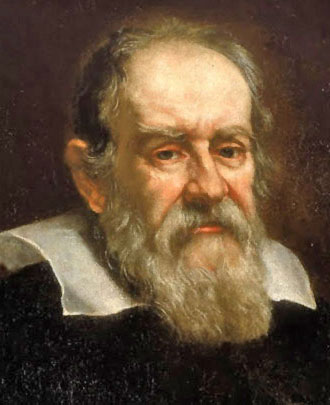 In 1609 Galileo Galilei knew what the killer application was: tracking celestial bodies. Having a goal, he improved the magnification technology first by a factor 4 over Lipperhey's, then by a factor 30. The improved technology and the scientific collection of experimental data allowed him to publish the starry messenger newsletter Sidereus Nuncius in March 1610, and astronomy took off faster than blades or the iPhone today. Moons on Jupiter! Can you think of anything more exciting and captivating? Can you not be a cosmologist in 1610? Astutely naming the four moons after the powerful Medici bankers brought in the funding for more research, so shattering and revolutionary the Vatican felt threatened.
Skip forward 400 years. You have invented a digital press. What would you expect Galileo to do for you today? Let us first adjust the currency for the inflation over the past 400 years. You are a conglomerate or keiretsu (系列) and your business is $100G, i.e., to qualify as a killer application, it has to be a $10G idea, a so-called B++ idea.
Building a digital press and shipping it to the customer is like Lipperhey's telescope. You make a buck, but you do not become rich. Since in 2009 we like the concept of SaaS or software as a service, Galileo could sketch up a solution like this:

This would allow him to publish his Sidereus Nuncius, even remotely, and PSIP would ensure Johannes Kepler would see matching colors to those on Galileo's display. PSIP? Wait a minute, we already read that, it was the blog post on XNS and print services last year's March 19. That did not qualify as a B++ idea. Think farther out of the box.
If you ever visited a printer, i.e., a plant with a press that manufactures printed artifacts, you know that the printer is only a single piece in the building. Printing is manufacturing, and the press is just one machine in the factory.
There is a lot going on before the press: calculating printing costs and writing bids, preflighting the material, reformatting and processing it as necessary, obtaining missing elements like fonts and images in the correct format and quality, managing color profiles, making proofs, subcontracting manufacturing steps to a trade press or a remote partner, etc.
There is also a lot going on after the press: collating, laminating, folding, binding, trimming, quality-checking, shrink-wrapping, packaging, shipping, billing, etc. This is a bindery in Lausanne:
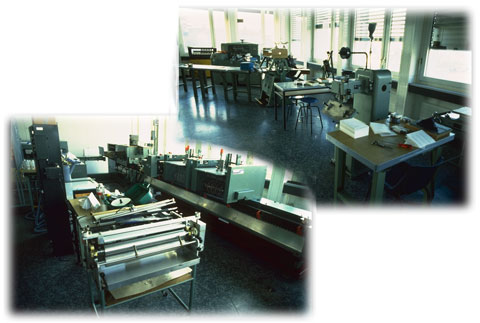
I am showing the bindery because this is where the money is made. In 1568, Jost Amman published his Ständebuch, in which for each profession (Stand) he had a woodcut and a description of the profession in the professional's words.
If you read these descriptions, the book binder is the only one who states (in the last line): "I make a lot of money with my work":

Galileo thinks: "hmm, this might be a B—, I think I can do better." He thinks about the idea of publishing his Sidereus Nuncius, in Prague, so Johannes Kepler can get it right away, but then hears the rumor that that year (1612) Kepler was thinking of moving to Linz in Austria, so to be sure he would need a printer both in Prague and Linz.
With Medici's funding, buying the digital press is not a problem. Having the vendor shipping the press and finding good operators is not a problem either. The problem is all that stuff before and after the press. Many interested printers already have other presses and all the related equipment. The real problem is making it all working together.
Sure, there are legions of printing consultants that can integrate the press, build all the color profiles, install all the correct firmware versions in the various devices, but it is a slow, error-prone, and difficult process.

So here is Galileo's B+ idea. How does Intel make money by selling at cut-throat prices products that cost a fortune to develop and manufacture? Hand how can they keep doing Tick-Tock at that frenetic rate?
They could not do it with an army of consultants who travel around and upgrade fabs. Not at that speed and cost. Since all of Intel's fab facilities are fully automated and software controlled, the correct processing parameters and machine schedules are more or less uploaded from their Hillsboro research fab. Think about that; Intel will upload an entire factory!
Galileo hires a scientist with the required skills and starts a project to build a system that can upload from a print shop all their equipment parameters, their accounting, bid models, customer profiles, etc. Trust? it is a matter of branding. People trust Galileo.
Once all the information is in the lab, the system will come up with a number of options to upgrade the print shop. The sales rep and his or her sales engineer negotiate with the customer. Then the required equipment is shipped and installed. Once it is up and networked, the print shop is downloaded and the printer starts working and making money. Voilà, c'est simple, n'est pas?
But Galileo is not content with B+, he is shooting for B++. He is thinking of all the work tracking stars, taking notes, cross-checking data, writing papers, formatting them, etc. is a lot of work. And let us be honest, spending the night in a good restaurant in good company in Arcetri is more fun than staring in a telescope.
There are a lot of smart people in the world. They may not all be esoteric speculative designers like him, but there a lot of very smart and motivated people who can produce highly valuable printed goods. Galileo realizes two things: already Aldo Manuzio in Venice had found out that you make more money as a publisher than as a printer, and if the price is right, you can recruit a lot of top-notch collaborators through crowd-sourcing (of course, a crumbling Byzantine empire helps).
This is where being big is important, because to build a network of a gazillion editors and pay them automatically according to the sale of their publications requires vast resources, like your own bank to settle all the payments and a flexible open digital rights management system.
The latter is actually the easiest part, because MPEG-21 already contains a solution and MPEG-A—Multimedia Application Formats has all the code to quickly rig up a prototype and get the funding to build a production system.
See, was that not easy? All you need to do is put Galileo or somebody of his caliber in charge. When it is about communication, humans have always been willing to spend large amounts of money, because that money is an investment. But do not forget you need those special people that have valuable entities to communicate, groom your brand.
Homework: Why does Brother Dominique not have a B++ project?
Time for this scribe to wrap up and go back tweaking printer drivers. With Brother Dominique, a colophon invoking a pulchra puella? No. En lieu, to close the loop with Derrida, I will deconstruct in front of your very eyes a woman: 女. She consist of three strokes. Although you can never mix macho katakana with girly hiragana, we will take the strokes in order as a hiragana, a katakana, and a kanji: くノ一. In romanji that is kunoichi — Ninja!

Note: If you are a pupil or student and found this post researching on the Internet for your assignment, be aware that here you are not reading a scientific journal of archive quality. This is just an informal blog post and you are reading fiction written for entertainment (and branding).