Showing posts with label science awards. Show all posts

Wednesday, July 4, 2018

New Swiss State Secretary for Education, Research and Innovation

Today, the Swiss Federal Council appointed Martina Hirayama as the new State Secretary for Education, Research and Innovation at the request of the Federal Department of Economic Affairs, Education and Research EAER.

Martina Hirayama

Martina Hirayama has been president of the Institute Council of METAS, the Federal Institute of Metrology, since 2012. She has also been vice president of the board of Innosuisse, Switzerland’s Innovation Promotion Agency (up to the end of 2017 the Commission for Technology and Innovation) since 2011 and a member of the Swiss National Science Foundation’s Foundation Council since 2016. Since 2011 Ms Hirayama has been dean of the ZHAW School of Engineering and is a member of the ZHAW’s Executive Board. Since 2014 she has also been Head of International Affairs.

Martina Hirayama studied chemistry at the University of Fribourg, at the ETH Zurich and at Imperial College London, obtaining a doctorate in technical sciences from the ETH. She later took a postgraduate degree in economics at the same institution. Following her doctorate she was group leader at the Institute of Polymers at the ETH Zurich, from 1995. During this time, Ms Hirayama co-founded a start-up in new coating technologies, and was CEO of the company until 2008. In 2003 she began lecturing in industrial chemistry at Zurich University of Applied Sciences Winterthur ZHW, where she developed and headed the field of polymer materials and obtained her professorship. From 2007 to 2010 she developed the Institute of Materials and Process Engineering. Ms Hirayama is a citizen of both Switzerland and Germany.

With such wide-ranging experience in research, teaching, entrepreneurship, management and administration, Ms Hirayama is very well equipped to head the State Secretariat for Education, Research and Innovation SERI. She has impressive expertise at the interface between science and business. The Federal Council has chosen a person with huge initiative and creativity, with a broad network in the field of education, research and innovation as well as politics, public administration and the private sector.

Ms Hirayama perfectly meets the exacting requirements of this position of State Secretary for Education, Research and Innovation. The important task of equipping Switzerland’s excellent ERI system for the digital future falls to the state secretariat she will now head. The Confederation, cantons, professional organisations and other players must work together to continue to strengthen both vocational and professional education and training and academic education, and to maintain Switzerland’s position as a world leader in research and innovation.

Wednesday, January 29, 2014

The 2014 (30th) Japan Prize

On 23 April 2014, Yasuharu Suematsu, Honorary Professor of Tokyo Institute of Technology, will be bestowed the 2014 (30th) Japan Prize in Electronics, Information and Communication for his pioneering research on semiconductor lasers for high-capacity long-distance optical fiber communication

Dr. Yasuharu Suematsu pioneered the way for high-capacity long-distance optical fiber communication, which is the core technology in our information networks, especially the Internet. It was realized through the development of semiconductor lasers capable of operating with optical fibers at a wavelength band having low transmission loss, as well as operating with stable wavelength under high-speed modulation.

The prosperity of the Internet would not have been possible without the high-capacity long-distance optical fiber transmission system using combination of light sources, which can generate high-speed modulation optical signal, and low-loss optical fiber, which can transmit optical signal across long distances. Despite the demonstration of semiconductor lasers in 1962 and the prediction of the nature of low-loss property of optical silica fiber in 1966, scientific and technological breakthroughs were still needed to establish the core technologies for such transmission systems. In particular, semiconductor lasers at the time were not applicable for such systems due to the instability of the lasing wavelength under rapid output power modulation to generate information signal.

From early on, Dr. Suematsu was proposing a high-performance transmission system using optical fiber. He identified the requirements of lasers and led the development of semiconductor lasers for high-capacity long-distance optical fiber transmission from an engineering approach, covering a wide range of disciplines from theory to materials. In 1974, Dr. Suematsu proposed the integration of reflectors with phase-shifted periodic structures into semiconductor lasers, which led to the concept of dynamic single-mode lasers having stable lasing wavelength even under high-speed modulation. He also realized in 1979, the room-temperature continuous-wave operation of InGaAsP lasers in the 1.5-μm band, the wavelength range with lowest loss in the optical fiber.

In 1981, he combined these technologies and achieved the room-temperature continuous-wave operation of an InGaAsP laser integrated with phase-shifted reflectors in the 1.5-μm band, thereby becoming the world’s first to demonstrate dynamic single mode operation. Before his achievement, realization of integrated lasers was considered technologically too difficult, however, his efforts finally opened up the way for high-capacity long-distance optical fiber communication. Dynamic single mode lasers have become the standard for light sources in present-day high-capacity optical fiber transmission systems in overland cables and intercontinental submarine cables.

Today, there is an ever-growing demand for high-capacity long-distance optical fiber communication, which has now become a part of our social infrastructure. It is expected that the future growth in the capacity of optical transmission systems will not only benefit ordinary communications and video transmissions, but will also lead to the dissemination of new systems in our society, such as telemedical services with real-time transmission of ultra high-resolution video.

Anticipating the future requirements, Dr. Suematsu combined theory and experiments to open up a new paradigm in semiconductor lasers. Furthermore, his approach in achieving dynamic single-mode operation at the optical transmission wavelength was an excellent example of how an engineering research should be. As a result, he has made indispensable contributions to forming the foundation of today’s information society. Dr. Suematsu’s pioneering research achievements are thereby deemed most eminently deserving of the 2014 Japan Prize given to honor contributions in the field of “Electronics, Information and Communication.”

末松安晴博士は、光ファイバーの損失が最小となる波長の光を発し、かつ高速変調時に波長変動が抑制できる半導体レーザーを実現して、インターネットをはじめとする情報ネットワークを支える大容量長距離光ファイバー通信に道を拓いた。

インターネットは、高速変調が可能な光源と低損失の光ファイバーを用いた大容量長距離光通信により支えられている。しかし1962年に半導体レーザーが作られ、1966年に光ファイバーの低損失予測が提唱されても、その根幹を支える技術が確立するまでには、学術的・技術的ブレークスルーが必要であった。特に、当時の半導体レーザーは高速変調時の発振波長が変動することから、大容量の光ファイバー通信に適用することができなかった。

末松博士は、光ファイバーを使用する高性能伝送システムを早くから提唱し、実現すべきシステムから必要とされるレーザーの特性を定めて、理論から材料までの広範な分野をカバーした工学的アプローチで大容量長距離通信用途の半導体レーザー開発を先導した。まず1974年に位相シフトを有する周期的構造を用いた反射器を半導体レーザーに集積することを提案し、高速変調時に発振波長が安定する動的単一モードレーザーの概念へと発展させた。並行して、光ファイバーの損失が最小となる1.5µm帯で発振するInGaAsPレーザーの室温連続発振を実現した。1981年には、これらの技術を組み合わせ、位相シフトを有する反射器を集積したInGaAsPレーザーを1.5µm帯で室温連続発振させ、動的単一モード動作を世界で初めて実証した。当初、集積レーザーは技術的に難しいとみられていたが、これを覆して大容量長距離光ファイバー通信への道を拓いたのである。現在、動的単一モードレーザーは、大容量光ファイバー通信の光源として、陸上光幹線、大陸間海底光幹線に遍く使われている。

今日、社会基盤となった大容量長距離光ファイバー通信への要求はとどまるところがない。今後、光通信が一層大容量化することにより、通常の通信や動画配信にとどまらず、超高精細画像の実時間伝送による遠隔医療など新たなシステムが社会に広く普及していくと期待されている。

要求される性能を予想し、理論と実験を組み合わせて新たなパラダイムを通信用半導体レーザーにもたらし、光通信波長で動的単一モード発振を実現した末松博士の業績は、工学研究のあるべき姿を示しており、世界を先導して現在の情報化社会の基盤の形成に不可欠な貢献をした。末松安晴博士の業績は「エレクトロニクス、情報、通信」分野における貢献を称える2014年日本国際賞にふさわしいと考える。

Thursday, August 4, 2011

Macallan RPS awards

Royal Photographic SocietyThe Royal Photographic Society in London has announced the Macallan Royal Photographic Society Awards for 2011.

The Progress Medal and Honorary Fellowship, in recognition of an invention, research, publication or other contribution which has resulted in an important advance in the scientific or technological development of photography or imaging in their widest sense, goes to Rodney Shaw, President and cofounder of White Rose Digital, which provides user-friendly imaging-methodologies for digital photographers.

Phil Green, will receive the Davies Medal, which is awarded for a significant contribution in the digital field of imaging science. Instituted in 1998 and sponsored by Kodak European Research and Development, the medal is in memory of Dr. E.R. Davies, a former Research Director of their Harrow Laboratories.

Shaw and Green will receive their awards at the ceremony which will take place on 8 September 2011 at the Royal Society, Carlton House Terrace, London.

Tuesday, May 24, 2011

James Bowmaker

On 4th May 2011 the Honorary Membership of The Colour Group (Great Britain) was bestowed on Professor James Bowmaker by the Chairman Andrew Stockman.

Jim Bowmaker is one of the leading and most-respected figures in colour vision research. His career has spanned more than 40 years since his first of more than 100 impressive peer-reviewed publications appeared in 1970. After a Postdoctoral Fellowship at UCLA, Jim moved to the MRC Vision Unit at the University of Sussex, then to Queen Mary College, University of London, and finally to the UCL Institute of Ophthalmology.

Jim is a scientist of international renown. He was awarded the Rank Prize for optoelectronics (vision) in 1988 with Jeremy Nathans, John Mollon and Gerry Jacobs, and was the Colour Group Palmer lecturer in 2005.

Jim's key scientific achievements include:

  • The precise determination, by microspectrophotometry, of the absorbance spectra of human and Old World monkey cone visual pigments and the hypothesis that there is spectral variability in the human L and M cones.
  • The establishment of the polymorphic basis of colour vision in New World monkeys, with the hypothesis that there is a single polymorphic locus on the X chromosome for L and M cone pigments in these species.
  • The identification of four spectral classes of cone, including ultraviolet-sensitive cones, in birds and fish, and establishing the potential for tetrachromatic colour vision in these species.
  • The identification of specific tuning sites within rod opsins and UV/VS cone opsins in fish, birds and mammals.
  • The establishment that at least seven spectrally distinct cone opsins can be expressed within individual species from the rapidly evolving cichlid fish of the African Great Lakes. These species determine their spectral sensitivity by differential expression of only three of the seven cone opsin genes.

James Bowmaker

Jim in the wild outside the laboratory, usually near a glass of red wine, eating good food, and with his wife, friends and colleagues…

[Source: The Colour Group Newsletter 2011-05 / Andrew Stockman]

Saturday, March 19, 2011

Japan Prize Ceremony cancelled

The Board of the Japan Prize Foundation has reached a deliberate conclusion to call off a series of events that were planned to honor the 2011 Japan Prize laureates, given the circumstances in the aftermath of the devastating earthquake and tsunami that hit the northeastern coastal area of the Japanese main island on March 11.

There is no ceremony held but the Foundation is planning to hand the medal and certificate of the Japan Prize to the laureates directly; Dr. Dennis Ritchie and Dr. Ken Thompson in the field of "Information and Communication" and Dr. Tadamitsu Kishimoto and Dr. Toshio Hirano in the field of "Bioscience and Medical Science." The Foundation is also planning to invite them to the next year's ceremony as the Foundation's special guests where they would like to express Japan's celebration to their achievement.

Friday, February 4, 2011

New SPIE Fellow at EI

Each year, SPIE promotes members as new Fellows of the Society. Fellows are Members of distinction who have made significant scientific and technical contributions in the multidisciplinary fields of optics, photonics, and imaging. They are honored for their technical achievement, for their service to the general optics community, and to SPIE in particular. "The annual recognition of Fellows provides an opportunity for us to acknowledge Members for their outstanding technical contributions and service to SPIE," says Katarina Svanberg, SPIE President.

Yu-Jin Zhang and Majid Rabbani at EI

At this year's EI, Prof. Yu-Jin Zhang of Tsinghua University was promoted for achievements in image engineering

Prof. Zhang studied image processing in Belgium and plays and important international role as an influential scientific ambassador. Now at Tsinghua University in Beijing, he is active in European national science foundations and in American learned societies.

I first met Prof. Zhang when he joined the Program Committee of the Internet Imaging Conference I organized for the SPIE/IS&T Electronic Imaging Symposium (part of Photonics West) from 2000 on. He was an active member who helped me setting the direction for the conference and solicited a number of papers. I then met him again when he joined the Review Panel of the Swiss National Center of Competence in Research on Interactive Multimodal Information Management (IM2). More recently, in 2008 he took my place as an Associate Editor for electronic imaging at Optical Engineering.

During his career, Prof. Zhang has chosen a number of fields in electronic imaging and taken a deep dive. This results in two accomplishments. The first is the scientific advancement of the field that can be achieved by taking a fresh look from the distance and gaining new insights. The second is the creation of new curricula and the authoring of novel text books. For example, his 2009 book on Image Engineering is the first comprehensive textbook on this topic since Pratt's 1991 Digital Image Processing.

Yu-Jin Zhang: Image Engineering

In research, the first field Prof. Zhang tackled was image segmentation. He created a new framework that first allowed him to efficiently implement and compare existing methods, and then allowed him to invent new approaches and algorithms.

In the second deep dive, he tackled a larger field, namely image and video retrieval. There are several retrieval methods: object based, feature based, semantic based, (surrounding) text based, etc. Prof. Zhang has created and deployed a framework like in the image segmentation case, but this time more general to cover all retrieval paradigms. He shares his knowledge in machine learning for imaging not only in publications and education, but also in providing direction to IM2.

The scope was again broadened in his third deep dive, this time encompassing all of electronic imaging. He had developed a structured view of the field, which has culminated in the Image Engineering book.

In summary, Prof. Zhang is a prolific scientific pollinator across continents and excels both in research and in education. At EI 2011 he was also awarded a certificate of appreciation for his work starting up a new conference on Parallel Processing for Internet Imaging.

Wednesday, November 24, 2010

A Beaming Inventor

We recently reported on the winners of the National Medal of Science and the National Medal of Technology and Innovation. In the meantime Mostly Color Channel's correspondent in D.C. sent us the photographs from the ceremony, which took place Monday last week.

The ceremony involves all the pomp and circumstance required for such an important State event:

Federico Faggin and Barak Obama

When the POTUS shakes your hand, you realize he is not just a great leader but also a tall man:

Federico Faggin and Barak Obama

The current President is perfectly comfortable performing the ceremony ad lib, without reading from a teleprompter. Here he is being handed over the medal:

Federico Faggin and Barak Obama

It is harder to say who is happier for this moment, Mr. Obama or Dr. Faggin?

Federico Faggin and Barak Obama

But certainly here FF is beaming:

Federico Faggin and Barak Obama

You can learn more about the invention of the microprocessor from this IEEE Solid-State Circuits Magazine article: The Making of the First Microprocessor, 10.1109/MSSC.2008.930938. For a trove of historical details around the invention of the microprocessor you may also want to visit the 4004 Web site.

Saturday, October 30, 2010

Disney Research Zurich Wins Award

Disney Research Zurich has won the Tell Award for most significant Swiss Technology and Innovation Investment in 2009, the Walt Disney Company, ETH Zurich and the Greater Zurich Area AG jointly announced. Receiving the Tell Award is a mark of recognition to the Los Angeles-based company for successfully launching operations of its Disney Research Centre in the Greater Zurich Area in collaboration with ETH Zurich. The Tell Award is an annual celebration of Switzerland's most significant inward investment projects. Disney Research Zurich (DRZ) is the only research lab that Disney operates in Europe.

Click here for the full story

Friday, October 15, 2010

President Obama Honors Nation's Top Scientists and Innovators

The White House just announced the winners of the National Medal of Science and the National Medal of Technology and Innovation. The press release can be found at http://www.whitehouse.gov/briefing-room/statements-and-releases.

We are particularly delighted the inventors of the microprocessor are being recognized. In particular, Dr. Federico Faggin was also coinventor of the artificial retina and cofounder of Foveon. Congratulations, Federico!

Federico Faggin, president of Zilog

Tuesday, July 20, 2010

Dr. Steven J. Simske to become IS&T Fellow

IS&T Fellowship is awarded to a Regular Member for outstanding achievement in imaging science or engineering. Later this year Dr. Steven J. Simske will be bestowed the Fellowship for his leadership and innovation in the area of security printing and imaging.

Dr. Steven J. SimskeSteve Simske is the director and chief technologist for the SPIEGEL (Security Printing and Imaging Engineering Geared toward Enterprise Lifecycle) program at Hewlett-Packard Laboratories. He received his BS in biomedical engineering from Marquette University (1986); his MS in biomedical engineering from Rensselaer Polytechnic Institute (1987); his PhD in electrical engineering from the University of Colorado (1990); and his Post-Doctorate in aerospace engineering from the University of Colorado (1993). Dr. Simske was a research professor at the University of Colorado until 2007, where he designed and built the first autonomous system to support mice in space and performed research on 11 US Space Shuttle missions.

Dr. Simske joined HP in 1994 and developed HP's automatic document analysis software, which still ships in HP's scanner, all-in-one, and copier products. Dr. Simske joined HP Labs in 2000, where he led HP's book and document digitization efforts and created HP's meta-algorithmic program focused on the design patterns and mathematics for combining multiple intelligent systems for improved performance, accuracy, and robustness (since used in more than a dozen technology areas).

Dr. Simske helped create HP's product tracking and authentication program in 2004. This broad effort, which has evolved into the SPIEGEL program, supports HP's own brand protection and anti-counterfeiting efforts, which protect a $60B+/annum supply chain. SPIEGEL is supported by research in content understanding, intelligent analysis systems, biometric algorithms, track and trace, forensics, product authentication and dynamic biometrics. In 2008, HP began investigating counterfeits in its worldwide return centers using Dr. Simske's Image-Based Forensic Service. He also created a solution for the US-wide Tamper-Resistant Prescription Pad program within the Centers for Medicare and Medicaid.

Dr. Simske currently holds more than 30 US patents and has published more than 200 journal and conference papers. He has also supported more than 30 graduate students in the past 15 years.

For more information see 2010 Honors and Award Recipients.

Thursday, July 8, 2010

ICIS Outstanding Paper Award

In the evening of Wednesday 28 January 1998, R.R. Donnelley's A. John Michaelis moderated a memorable panel discussion on electronic publishing at the EI Color Hardcopy Conference in the San Jose Hilton. Up to that heated discussion, the buzzwords were electronic printing and electronic publishing. After that day's visionary papers, Ralph Agazi of UC Davis led the charge in the panel discussion that we should stop talking about "electronic," because historically that term has been used when the steps in a mechanical workflow were changed to take advantage of the latest electronic technologies, but the workflow itself remained unchanged.

Inspired by the papers and the opening statements of the panel speakers, the audience demanded new buzzwords to characterize the paradigm shift from evolutionary process improvement to revolutionary new workflows. The label "digital" stuck.

In the past dozen years, a lot has been said and written about digital publishing, but less on digital printing. The reason is simple: the paradigm shift is taking much longer to complete in printing than in publishing. The print workflow has been perfected over centuries and is very efficient, with pipelining, buffering, and scheduling.

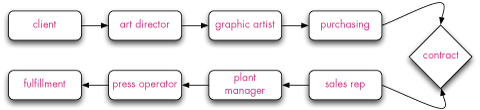
Electronic printing workflow

The camel's back was broken only when content creation tools evolved sufficiently that skilled workers were replaced by amateurs, because as Marshall McLuhan phrased it, instead of saving work, labor-saving devices permit everybody to do their own work. While FrameMaker died and InDesign+Illustrator got replaced by Word+PowerPoint, Web 2.0 brought the concept of a print service provider and the run length for a digital press job went from 500 to 1.

Digital printing workflow

While to a print job a print plant looks like a pipeline, to a print plant a stream of print jobs is a collection of processing steps that must be performed in parallel while avoiding idle times on resources, requiring new scheduling paradigms.

In such a complex heterogeneous system, the challenge is to find emergent model behavior, i.e., behavior caused by the interaction between characteristics of different models and not intended or foreseen by the model. The classical example is priority inversion between threads in an operating system, which causes deadlock.

Emergent behavior is discovered through simulation — the execution of models. HP's research in this area was presented at the recent 31th International Congress on Imaging Science in Beijing. The paper, Operations Modeling and Analysis of Commercial Print Services by Jun Zeng, I-Jong Lin, and Tzipi Netz, has received the Outstanding Paper Award. The paper is not online, but copies can be requested from Jun Zeng.

Thursday, March 25, 2010

Thacker to receive Turing Award

ACM named Charles P. Thacker the winner of the 2009 ACM A.M. Turing Award for his pioneering design and realization of the Alto, the first modern personal computer, and the prototype for networked personal computers. Thacker's design, which he built while at Xerox PARC (Palo Alto Research Center), reflected a new vision of a self-sufficient, networked computer on every desk, equipped with innovations that are standard in today's models. Thacker was also cited for his contributions to the Ethernet local area network, which enables multiple computers to communicate and share resources, as well as the first multiprocessor workstation, and the prototype for today's most used tablet PC, with its capabilities for direct user interaction. The Turing Award, widely considered the "Nobel Prize in Computing," is named for the British mathematician Alan M. Turing. The award carries a $250,000 prize, with financial support provided by Intel Corporation and Google Inc.

Monday, January 25, 2010

Photonics West

We are science professionals, not professional bloggers, so we cheat a little by using the auto-pilot feature, where we write posts that are scheduled in the future. This time it back-fired, because Bahaa Saleh did not show up at EI; however, he just received his award at the Fellows Luncheon in San Francisco at Photonics West.

By the way, if you are attending, do not miss the Welcome Reception tonight at 7:00 pm in the Hilton San Francisco Union Square Hotel at 333 O'Farrell Street. To celebrate the 50th anniversary of the laser (the first laser was fired up on 16 May 1960 by Ted Maiman), SPIE is featuring the "Cirque du Lasaire," a night of laser infused magic, conversation, acrobatics, and laser displays. For more information see http://spie.org/advancingthelaser.

Friday, January 22, 2010

Electronic Imaging 2010 IS&T Awards

Wednesday 20 January 2010, IS&T's Immediate Past President Dr. Eric G. Hanson has bestowed awards to two member with a long list of contributions to imaging science, IS&T, and EI.

The IS&T Fellowship is awarded to a Regular Member for outstanding achievement in imaging science or engineering.

Dr. Raja BalaRaja Bala for his prolific contributions in the areas of digital color reproduction, color transforms, and printer system modeling.

Raja Bala has been with Xerox Corporation since 1993, where he is currently a principal scientist conducting research and development in digital color imaging.

Prior to this he received his MS (1988) and PhD (1992) from Purdue University, and BS from the University of Texas at Arlington (1987), all in electrical engineering. Dr. Bala's research interests include color management, device characterization, optimal representations and transformations of color, image-adaptive rendering, security printing, and image personalization. His research and inventions have been incorporated into several leading Xerox color products.

Dr. Bala served as an adjunct faculty member in the School of Electrical Engineering at Rochester Institute of Technology (2003-2005). He has also been an active member of IS&T, notably within the leadership of the IS&T/SID Color Imaging Conference, where he has served as short course, program, and general chair. He has taught many highly-rated courses on system color imaging at IS&T conferences, and has served as associate editor for the Journal of Imaging Science & Technology. He is currently a vice president on the IS&T Board of Directors.

Dr. Bala's awards include the Xerox Excellence in Science & Technology Award (1994) and the R&D Magazine 100 Team Award for Specialty Imaging Technology (2007). He has authored two book chapters and more than 50 conference and journal publications. Dr. Bala has presented several invited talks and articles, and holds more than 50 US patents in the area of digital color imaging.

The IS&T Service Award is given in recognition of service to a Chapter, or to the Society.

Dr. Michael KrissMichael Kriss for his efforts on behalf of the Electronic Imaging Symposium, Color Imaging Conference, IS&T Board, and IS&T/Wiley series.

Michael A. Kriss received his PhD (1969) in physics from UCLA before joining Eastman Kodak Research Laboratories to work in the color photography division with a focus on image quality, image structure, image modeling, and simulation. In 1977, he published a chapter on image structure in Theory of the Photographic Process, 4th Edition, edited by Howard James. Dr. Kriss joined the physics division in 1980, where he focused on developing image processing algorithms for scanned film images and digital camera images. He became laboratory head of the Image Processing Laboratory in 1982, which laid the foundations for Kodak's entrance into the “digital age.”

From 1985 to 1988, Dr. Kriss worked with a team of managers to establish a Kodak research facility near Tokyo, Japan. Upon returning to the Research Laboratories, he headed a technical outreach program to universities around the country and managed the Algorithm Development Laboratory until his retirement in late 1992. In 1993, Dr. Kriss joined the University of Rochester. He served as the executive director of the Center of Electronic Imaging Systems and adjunct professor in the Department of Computer and Electrical Engineering where he managed outreach programs with industry and through a NSF Grant created a program on introductory digital imaging and a graduate course in digital imaging technology. During this period, Dr. Kriss wrote chapters on digital photography in the Encyclopedia of Applied Physics, Encyclopedia of Optics, and the IS&T Handbook of Photographic Science and Engineering.

Dr. Kriss returned to the West Coast in 1999 as the manager of the color imaging group at Sharp Laboratories of America until his retirement in 2004.

Dr. Kriss is a Fellow of IS&T and the 1999 recipient of the Davies Medal of the Royal Photographic Society. Dr. Kriss still teaches courses on digital imaging technology as an adjunct professor at Portland State University in Oregon and works with John Wiley & Sons as editor-in-chief for an IS&T series of texts on imaging science and technology.

Wednesday, January 20, 2010

Electronic Imaging 2010 New SPIE Fellow

SPIE Fellow badgeWe just recognized a newly promoted SPIE Fellow for 2010 who has made great contributions to the Electronic Imaging community and to SPIE. The 2010 Fellows Committee, chaired by Roxann Engelstad has selected 62 new Fellows of the Society, which were approved by the SPIE Board of Directors. Fellows are members of distinction who have made significant scientific and technical contributions in the fields of optics, photonics, and imaging. The annual recognition of Fellows provides an opportunity for us to acknowledge outstanding members for their service to the general optics community.
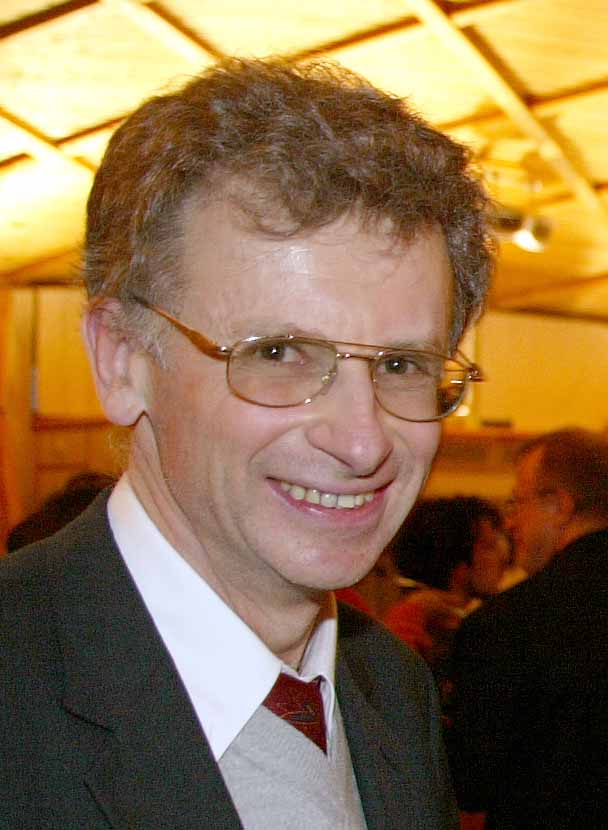
Prof. Bahaa SalehProf. Bahaa Saleh of The College of Optics & Photonics at the University of Central Florida.

Prof. Saleh’s fellow promotion is for specific research and achievements in optics and photonics, and more specifically in coherence and photon statistics, nonlinear and quantum optics, optical detection, image science, and vision.

This Fellow joins a prestigious list of more than 800 SPIE members so honored for their contribution to the discipline since the Society’s inception in 1955. Please join us in congratulating Prof. Saleh.

Friday, October 2, 2009

AIC Judd Award

Since 1973, when Betty Judd proposed to establish an AIC award in memory of her husband, Deane Brewster Judd, to recognize outstanding work in the field of color science, the AIC has been carrying out the process of selection of the recipients for this award every two years. The selection is an arduous procedure that includes nominations by AIC members and analysis of antecedents of the nominees by a Committee composed of previous recipients of the award.

Arne Valberg receives Judd Medal from Jose Caivano

As chairman of the Judd Award Committee, AIC Vice President Berit Bergström informs that the winner of the AIC Deane B. Judd Award 2009 is Dr. Arne Valberg. She can report that they have received four single nominations and one jointly nomination. All nominees have made outstanding contributions to our understanding of colour. Berit Bergström really hopes that they all will continue working in the international colour community for many years to come. The members of the 2009 Judd Award Committee have been: Paula Alessi, Robert Hunt, John Hutchings, Mitsuo Ikeda, Daniel Lozano, Alan Robertson, Lars Sivik, Gunnar Tonnquist and Pieter Walraven. These nine previous winners of the award and past president gave very careful consideration to the nominations.

Arne Valberg receives Judd Medal from Jose Caivano

Arne Valberg was born on December 31st, 1938. Below is an excerpt from his bio sketch as published by the AIC.

Arne Valberg receives Judd Medal from Jose Caivano

Education and positions

  • Studies at the Univ. of Oslo and Univ. of Basle, CH 1961-1967
  • Graduated as Cand real in Physics, Univ. of Oslo 1967
  • Research associate, Univ. of Basle, CH 1968-1971
  • Dr. philos, Univ of Oslo 1976
  • Ranked 2 for a Professorship in Biophysics, Univ. of Trondheim 1976
  • Research Scientist, Norwegian Research Council for Science and the Humanities, Univ. of Oslo, University of California, San Diego
  • Max Planck Inst., Göttingen and Univ. of Freiburg, BRD 1972-1990
  • Associate Professor, Univ. of Oslo 1990
  • Professor of Biophysics and Vision Science, Univ. of Oslo 1993
  • Professor of Biophysics and Vision Science, NTNU 1991 to present

Major grants and research projects

  • Norwegian Research Council for Science and the Humanities
  • European Science Foundation
  • Max Planck Gesellschaft
  • Deutsche Forschungsgemeinschaft
  • Schweizerische Nationalfonds zur Förderung der wissenschaftliche Forschung
  • Roche Science Foundadtion
  • IBM Norway
  • NSB Norway
  • NATO Grants for Collaborative Research
  • Thonning Owesen's Foundation
  • Blindeforbundet (Norw. Association for the Blind)
  • Thorstein Erbos Fund
  • European Union

From 1968 to 1994

  • Joint research projects in vision (psychophysics and electrophysiology) with groups from:
  • Univ. of Basle, Switzerland (1974).
  • Univ of Freiburg, BRD (1974-1980; B. Breitmeyer and L. Spillmann).
  • Max Planck Inst. for biophysical Chemistry, Göttingen, BRD (1981-1990, O.Creutzfeldt and B. Lee).
  • Univ. of California, San Diego, USA (1973).
  • Univ. of Chicago, USA.

From 1994 to present

  • Joint research on Low vision with Tambartun Centre for Low Vision Rehabilitation (with P. Fosse) and Univ. of Oslo (J.H. Wold and T. Seim), Norway.

From 1998 to 2001

  • Interdisciplinary Program at NTNU, ”Information coding and functional organisation of populations of nerve cells” Together with professors E. Moser and H. Mustaparta.

From 2000 to 2004

  • Strategic University Program from Norwegian Research Council, ”Neural mechanisms of sensory functions and memory” (same collaborators as above). Includes one dr. student (I. Rudvin) and one master student (G. E. Nygård).

2002-2006

  • Joint project with Brain Research Unit, University of Freiburg on ”Lateral interactions in vision”. Includes one German dr. student.

2002-2006

  • EU Concerted Action together with research groups from universities of Tübingen, Manchester and Utrecht. Project title: ”Photoreceptor dynamics in age-related macular degeneration”.

Editor/Author

  • From Pigment to Perception. Advances in Understanding Visual Processes. Plenum, 1991 (NATO ASI Series)
  • Die Farbe (editorial board)
  • Editor of Proceedings from 3 Scientific Conferences held in Norway
  • Lys Syn Farge, 280 pages (Tapir, 1998)
  • Light Vision Color, 460 pages (Wiley, & Sons, 2005)

Publications

  • About 100 full scientific papers
  • About 100 abstracts/short communications/scientific reports/conference contributions
  • 3 books
  • Several popular science articles

Friday, January 23, 2009

Electronic Imaging 2009 New SPIE Fellows

Wednesday, January 21 in San Jose we recognized three of SPIE’s newly promoted Fellows for 2009 who have made great contributions to the Electronic Imaging community and to this meeting. The 2009 Fellows Committee, chaired by James Harrington has selected 59 new Fellows of the Society, which were approved by the SPIE Board of Directors. Fellows are members of distinction who have made significant scientific and technical contributions in the fields of optics, photonics, and imaging. The annual recognition of Fellows provides an opportunity for us to acknowledge outstanding members for their service to the general optics community.

The first was Mr. John O. Merritt of The Merritt Group. Mr. Merritt's fellow promotion is for specific research and achievements in the areas of Stereoscopic Displays and Applications. His contributions include the advancement of 3D imaging in film-making, the development of a "Rapid Sequential Positioning" task used for evaluation testing and "gravity-referenced" video displays for the Navy teleoperated vehicle.

Second was Dr. Bernice E. Rogowitz of The IBM T.J. Watson Research Center. Dr. Rogowitz's fellow promotion is for specific achievements in human vision applications in electronic imaging. She has been a leader in research in perceptual areas relevant to imagingand visualization systems, in developing interactive software systems based on her deep understanding of these issues, and building a community linking the engineering and human vision communities.

Least but not last, was Prof. Shoji Tominaga of Chiba University, Japan. Prof. Tominaga's fellow promotion is for specific achievements in electronic imaging. His significant research includes analysis of the surface-spectral reflectance functions of inhomogeneous dielectric, work on the problem of estimating the three-dimensional scattering of light from a surface, and studies on imaging systems and algorithms for realizing human color constancy, predicting color appearance, and recognizing objects.

These Fellows join a prestigious list of more than 550 SPIE members so honored for their contribution to the discipline since the Society’s inception in 1955.

Shoji Tominaga, Bernice E. Rogowitz, John O. Merritt

Wednesday, December 24, 2008

Gunther Receives A.A. Michelson Award

At the annual CMG International Conference in Las Vegas last week, Dr. Neil Gunther was the recipient of the prestigious A.A. Michelson Award; the industry's highest honor for computer performance analysis and capacity planning. As he said in his acceptance speech, it was the fulfillment of a dream he had entertained at his first CMG Conference in 1993.

His presentation was unusual in that, rather than reviewing his own accomplishments, he presented a personal view of the experimental physicist Albert A. Michelson (after whom the award is named), his famous null measurement of the luminiferous aether, and its significance for both physics and computer management today; particularly in the context of the search for the Higgs boson at the LHC. As a theoretical physicist, Gunther holds the view that the Higgs will probably not be observed, many false positives notwithstanding. Like the aether search, it may well end up as the next famous null experiment.

Link to the announcement in Linux Magazin: click here.

Tuesday, December 9, 2008

A wimp's 40th birthday

Industry analysts generally equate modern personal computing with the GUI, or graphical user interface. Therefore, March 1992 is generally seen as the birth of the PC, namely the release date of Windows 3.1.

There is then another group of analysts that then counters the GUI was really invented on 24 January 1984 when the Macintosh was released. Of course others then claim the GUI is older than that when Smalltalk with its WIMP paradigm was invented at Xerox PARC.

Actually, the WIMP paradigm is even older than PARC. The PC was really invented concomitantly with the mainframe, and the main person behind it was "Lick" Licklider. You can read up the PC's history in M. Mitchell Waldrop's "The Dream Machine."

Anyway, the acronym is WIMP, which stands for windows, icons, mice, and pointing. That goes back to 40 years ago.

It the PC's history was linear, today we would use them to solve partial differential equations. The basic idea was time sharing, later called adaptive computing and today called cloud computing. Not a reason to spend money on an iPhone, Blackberry, or Netbook.

The paradigm shift occurred in San Francisco on 9 December 1968 at 1 p.m. at the ACM conference, when Doug Engelbart demonstrated his On-Line System or NLS. It was about augmenting human intellect, and in a single demo (a.k.a. The Mother of All Demos) he introduced concepts like windows, hypertext, mice, cording keyboard, collaborative software (groupware), video chatting, networking, and more to a stunned crowd still using punched cards.

The celebrations are this afternoon at Stanford in the Memorial Auditorium.

Happy Birthday, WIMP!

Tuesday, March 25, 2008

IS&T fellows

On behalf of the 2008 IS&T Honors and Awards Committee, the Society for Imaging Science and Technology (IS&T) today has announced those individuals selected for 2008 IS&T Fellowship. Fellowship is awarded to a Regular Member for outstanding achievement in imaging science or engineering. Ordinarily this will be demonstrated by citing several journal publications or patents for which the candidate is the sole or major contributor. Regular membership in the Society for at least three years prior to the time of nomination is required. At the time of award, the recipient must be a Regular Member in good standing. Not more than five awards per year are bestowed.

The new IS&T Fellows are:

  • Roger David Hersch (Ecole Polytechnique Fédérale de Lausanne) “for his contributions to halftoning, multispectral imaging, and digital typography”
  • Nathan M. Moroney (Hewlett-Packard Company) “for his contributions to scientific experimentation, practical application, and standardization of innovative color imaging technologies”
  • Richard Veregin (Xerox Research Centre of Canada) “for his contributions to electrophotographic toner and developer design”
  • David S. Weiss (Eastman Kodak Company) “for his contributions to the science and technology of electrophotographic imaging materials”

I am proud I can count the first half as longtime friends.

Roger David HerschRoger was a year ahead of me studying mathematics at the Swiss Federal Institute of Technology (ETH) in Zurich. We got to know each other by being both active in the Filmstelle, a student organization that twice a week borrowed cinematographic masterpieces from the Cinémathèque Suisse in Lausanne and exhibited them in a large auditorium.

Nathan M. MoroneyNathan (here with his wife Elizabeth Pirrotta) goes back to when I was taking courses in color science from Robert Hunt and Mark Fairchild at the RIT Munsell Color Science Laboratory and he was a student there. We both ended up at HP Labs and as you know we are partners in crime by conspiring to write this blog for you.